
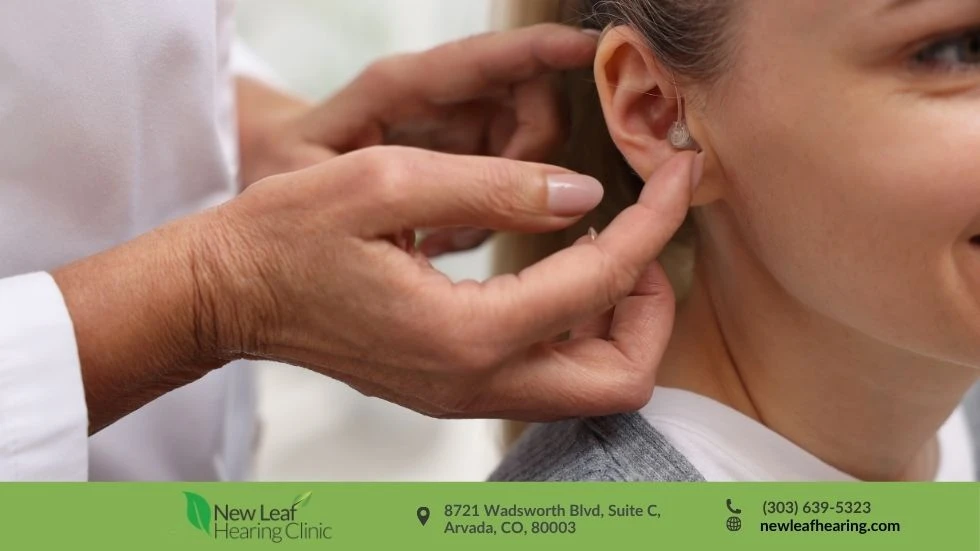
- An audiologist, also called a hearing doctor, is a licensed healthcare specialist trained to evaluate, diagnose, and treat hearing loss, tinnitus, and balance disorders using clinical testing and proven technology.
- Working with an audiologist means getting care that goes far beyond a basic hearing check - from identifying the exact type and degree of hearing loss to fitting and programming hearing aids tailored to your lifestyle.
- New Leaf Hearing Care provides comprehensive audiologist services to patients in Arvada, CO and Littleton, CO.
Hearing loss affects more than 48 million Americans, yet most people wait an average of seven years before seeking help. An audiologist, or hearing doctor, is the specialist trained to identify that loss early and build a clear path forward.
Knowing who to call and what to expect makes a real difference in outcomes.
New Leaf Hearing Care connects you with trusted audiologists in Arvada, CO and Littleton, CO.
What Is an Audiologist?
An audiologist is a licensed hearing specialist who holds a Doctor of Audiology (Au.D.) degree. That level of clinical training covers everything from how the inner ear converts sound waves into nerve signals, to how the brain interprets speech in noisy environments.
Audiologists are not the same as hearing aid salespeople, and they do not perform surgery like an ENT. Their focus is the full picture of your auditory health - testing, diagnosing, and managing the conditions that make it harder to hear and communicate.
The Core Services a Hearing Doctor Provides
Hearing Evaluations
A comprehensive hearing evaluation is the foundation of everything. Audiologists use calibrated testing equipment in soundproof booths to measure how well you hear tones across multiple frequencies, how clearly you understand speech, and whether the issue originates in the outer, middle, or inner ear.
The results map directly to a treatment plan.
Hearing Aid Fitting and Programming
When hearing aids are the right path, an audiologist does far more than hand you a device. They assess your specific pattern of hearing loss, match a hearing aid style and technology level to your daily life, and program the device to your prescription with real-ear measurement tools.
Follow-up appointments fine-tune the fitting as your brain adjusts to amplified sound.
The work continues after you leave with devices. Audiologists handle hearing aid repairs, replace worn parts like tubing and domes, and clean devices in the office, which helps keep your hearing aids working well over time.
Tinnitus Assessment and Management
Tinnitus (the ringing, buzzing, or hissing in the ears) affects roughly 15% of the U.S. adult population. An audiologist can assess its severity, rule out underlying causes, and recommend proven management strategies, including sound therapy and hearing aids with built-in tinnitus masking features.
Living with untreated tinnitus creates chronic stress. Getting a professional assessment is the first step to real relief.
Balance and Dizziness Testing
The inner ear controls more than your hearing, it regulates balance as well. Audiologists conduct vestibular testing to identify conditions like benign paroxysmal positional vertigo (BPPV) and refer patients to the appropriate specialists when medical treatment is needed.
A balance disorder that goes undiagnosed is a fall risk. Catching it early changes outcomes.
Hearing Protection and Prevention
Audiologists also work on the front end of hearing loss, evaluating your level of noise exposure and fitting custom hearing protection for workers in loud environments, musicians, and recreational shooters.
Prevention costs far less than treatment, and a hearing doctor can calculate exactly how much protection your specific situation requires.
Audiologist vs. ENT vs. Hearing Aid Specialist
Patients are often confused about who to see first. Here is the breakdown:
An audiologist diagnoses and manages hearing loss, tinnitus, and balance disorders. They hold a doctoral degree, perform a full range of diagnostic tests, and provide non-surgical treatment, including hearing aids and rehabilitation.
An ENT (otolaryngologist) is a medical doctor who treats diseases of the ear, nose, and throat. If surgery, infection treatment, or medication is needed, the ENT handles it. Audiologists and ENTs work together regularly.
A hearing aid specialist is licensed to fit and sell hearing aids but is not trained to diagnose hearing disorders or conduct clinical audiology testing.
For anyone experiencing new or worsening hearing loss, tinnitus, or dizziness, the audiologist is the right first call.
When Should You See a Hearing Doctor?
Schedule an appointment with an audiologist when you notice any of the following:
- You are asking people to repeat themselves more than once in a typical conversation.
- Speech sounds muffled even when the room is quiet.
- You are turning the television volume up to a level others find uncomfortable.
- You hear ringing or buzzing in one or both ears with no external source.
- You are experiencing recurring dizziness or problems with balance.
Any one of these signals warrants a professional evaluation.
A hearing doctor at New Leaf Hearing Care can determine whether what you are experiencing is a treatable condition and build a care plan from there.
Frequently Asked Questions
What is the difference between an audiologist and a hearing aid specialist?
An audiologist holds a doctoral degree in audiology and is trained to diagnose hearing disorders, balance conditions, and tinnitus using clinical testing equipment. A hearing aid specialist is licensed only to fit and dispense hearing aids and does not have the training or authority to diagnose hearing conditions or perform medical-grade evaluations.
What does a hearing evaluation with an audiologist include?
A comprehensive hearing evaluation includes pure-tone audiometry to measure your hearing thresholds across multiple frequencies, speech recognition testing to assess how clearly you understand words, and tympanometry to evaluate the health of the middle ear. The full appointment takes 45 to 60 minutes and ends with a detailed explanation of your results and recommended next steps.
How often should adults get a hearing test from an audiologist?
Adults with no known hearing concerns should have a baseline hearing evaluation by age 50, then schedule a follow-up every three years. Anyone already wearing hearing aids, working in high-noise environments, or managing conditions like diabetes or cardiovascular disease (both of which affect blood flow to the inner ear) should get tested annually. Early detection of changes in hearing thresholds gives your audiologist the window to adjust treatment before communication is significantly impacted.
Audiologists in Arvada and Littleton, CO
New Leaf Hearing Care serves patients in Arvada, CO and Littleton, CO with complete audiologist services, from diagnostic testing to hearing aid fitting and tinnitus management.
The practice combines clinical precision with personalized attention so every patient leaves with answers, not just a pamphlet.
A hearing doctor at New Leaf Hearing Care will walk you through your results, explain your options, and support you through every step of treatment.
Your hearing connects you to the people and places that matter most.
Protecting it starts with a single appointment. Contact us today!